Why Do Zebras Have Stripes? Solving One of Africa's Greatest Wildlife Mysteries
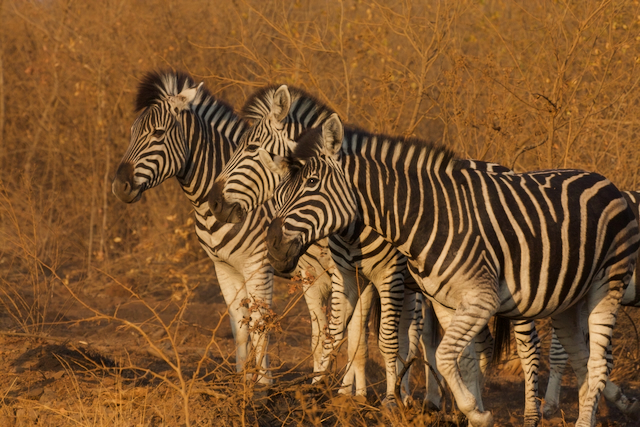
Spend even a few minutes on safari in Kruger National Park, and you’ll almost certainly come across a herd of zebras. Their bold black-and-white stripes stand out against the golden grasslands, making them one of Africa’s most iconic animals. But have you ever stopped to wonder why they look the way they do?
It’s a question that has puzzled scientists for centuries.
Early explorers believed the stripes were simply a form of camouflage. Others thought they confused predators. More recent studies suggest the real answer may have more to do with tiny insects than lions. As it turns out, the zebra’s coat is one of nature’s most fascinating examples of evolution, and the answer isn’t as black and white as the animal itself.
Every Zebra Is One of a Kind
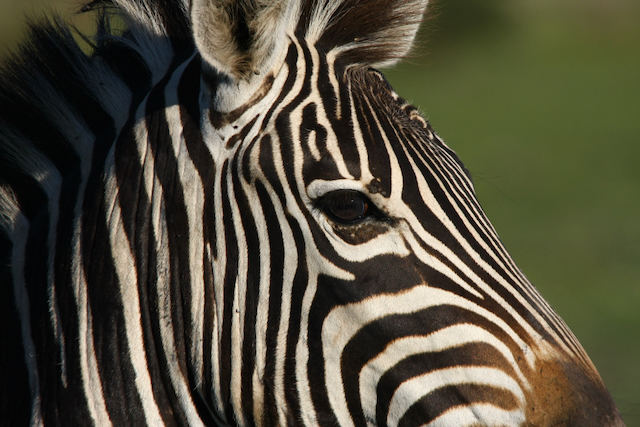
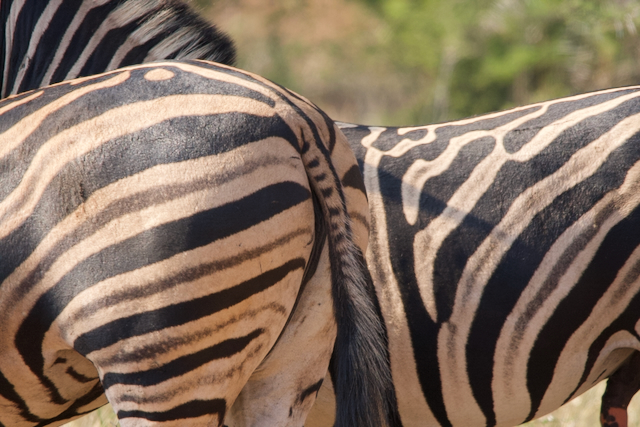
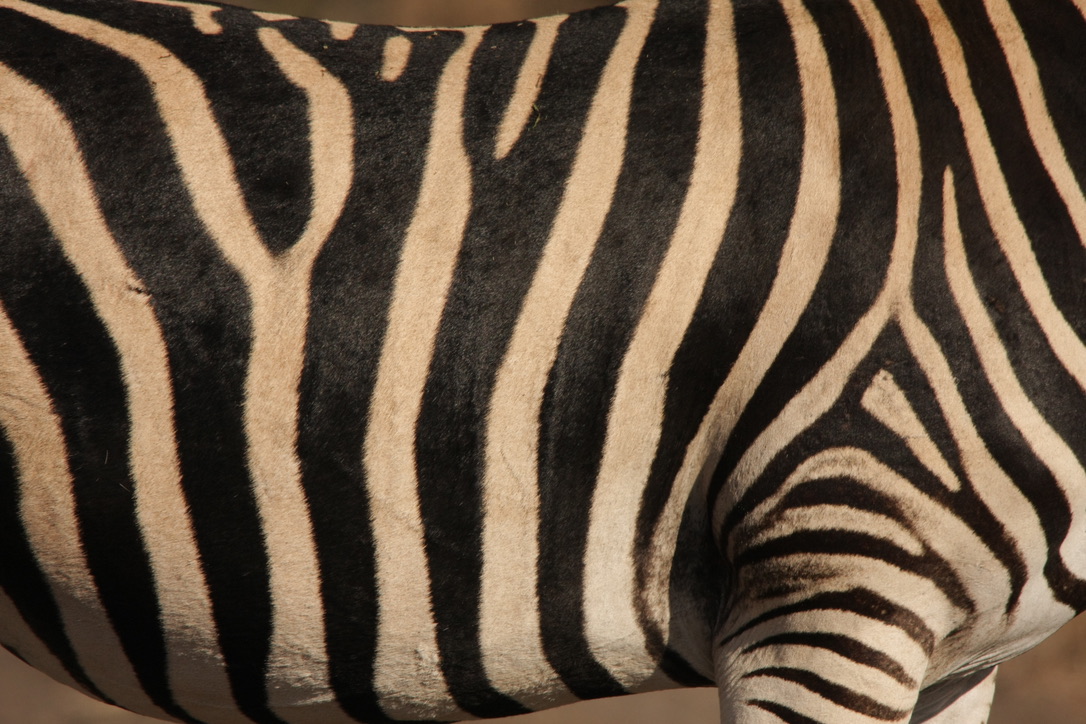
At first glance, all zebras appear to look the same. Spend more time watching them, however, and you’ll notice subtle differences in every animal.
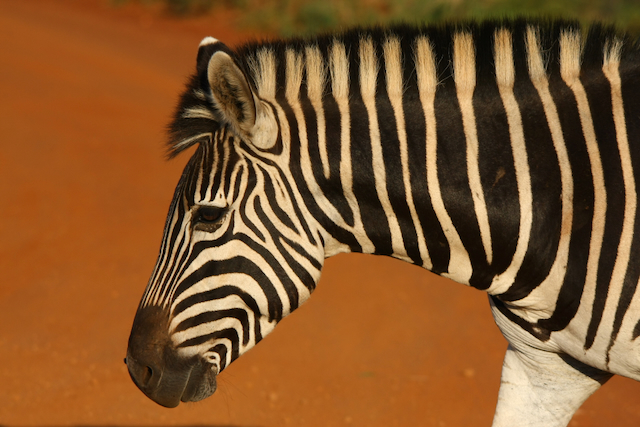
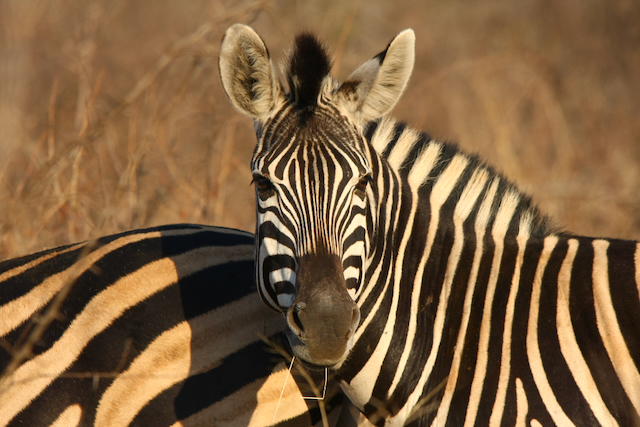
Just as every person has unique fingerprints, every zebra has its own distinctive stripe pattern. No two are exactly alike.
Researchers use these patterns to identify individual zebras without needing collars or tags. Even newborn foals quickly learn to recognise their mother’s stripes, helping them stay close in busy herds where hundreds of animals may gather around waterholes.
This unique pattern remains with the zebra for life, making each animal instantly recognisable to those who know what to look for.
Are the Stripes Really Camouflage?
It might seem strange to think that black-and-white stripes could help an animal hide. After all, zebras don’t exactly blend into the African landscape.
The idea of camouflage isn’t about becoming invisible. Instead, it’s about making it harder for predators to recognise a clear outline.
During the early morning or late afternoon, when much of Africa is bathed in soft golden light, the contrast between shadow and sunlight can make the stripes surprisingly effective at breaking up the zebra’s body shape. In tall grass or wooded areas, a predator may struggle to judge exactly where one zebra ends and another begins.
That said, most scientists now agree camouflage probably isn’t the main reason zebras evolved stripes. Lions have excellent night vision and rely heavily on smell, hearing and patience rather than eyesight alone.
The “Motion Dazzle” Effect
One of the most popular theories is that zebra stripes confuse predators during a chase.
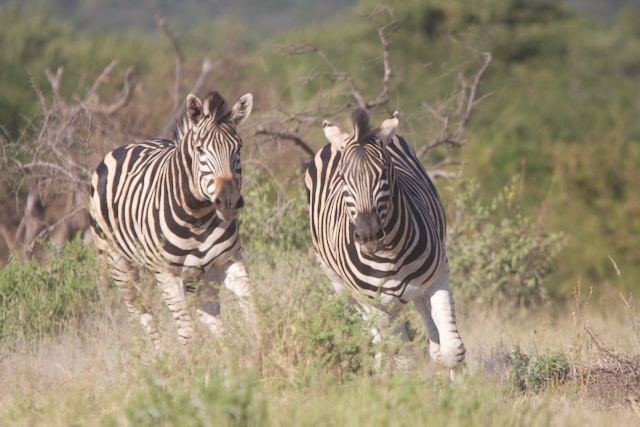
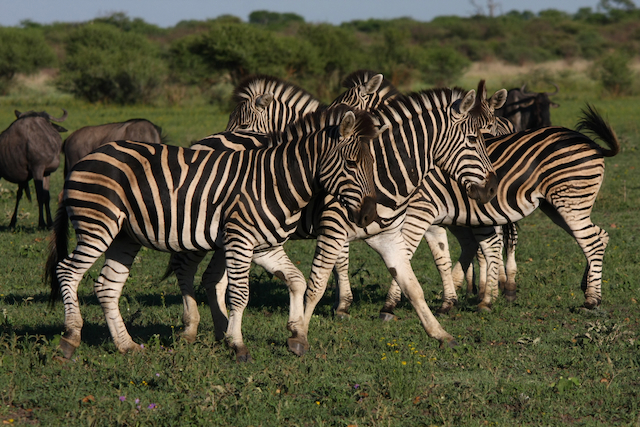
Imagine fifty zebras running together across an open plain. Instead of seeing individual animals, a lion is faced with a moving wall of flickering black and white patterns.
This visual confusion is known as motion dazzle.
The shifting stripes can make it difficult to judge speed, direction and distance, giving zebras a valuable split-second advantage when escaping danger.
While researchers continue to debate just how effective this is, there’s little doubt that a tightly packed herd is much harder to hunt than a single animal standing alone.
Zebras also rely on teamwork. They often bunch together when threatened, making it even more difficult for predators to isolate a target.
The Tiny Enemy That Changed Everything
Surprisingly, the strongest evidence for zebra stripes doesn’t involve lions at all.
It involves flies.
Horseflies and tsetse flies are more than just annoying insects. Their bites can cause blood loss, irritation and spread diseases that affect both wildlife and livestock.
Over the past two decades, scientists have carried out numerous experiments comparing striped surfaces with solid-coloured ones. Again and again, the results have been remarkably consistent.
Biting flies land far less often on striped surfaces.
Researchers believe the contrasting black-and-white pattern interferes with the insects’ vision, making it difficult for them to judge their landing approach. Instead of settling on the animal, they simply fly past.
For a zebra living its entire life on the African savanna, avoiding thousands of insect bites each year is a significant survival advantage.
Many wildlife biologists now believe protection against biting flies is the primary reason zebra stripes evolved in the first place.
Keeping Cool in the African Heat
Another fascinating idea is that stripes help zebras stay cool.
Black absorbs more heat than white. Because of this, the black stripes become slightly warmer during the day, creating tiny differences in air temperature across the animal’s body.
These small temperature changes may generate gentle air currents close to the skin, helping remove excess heat.
Some researchers have also observed that zebras can raise the hairs on their black stripes independently from the white ones, potentially improving airflow even further.
While scientists are still investigating exactly how much cooling this provides, it could be another example of evolution giving zebras an extra advantage in Africa’s harsh climate.
Built for Life in Open Country
Unlike buffalo, zebras don’t have massive horns.
Unlike impalas, they can’t disappear into thick bushes.
Instead, zebras survive through awareness, speed and cooperation.
A family group usually consists of one dominant stallion, several mares and their foals. They remain close together and communicate constantly through calls, body language and facial expressions.
When danger approaches, every member of the herd becomes alert almost instantly.
If necessary, zebras can reach speeds of around 65 km/h (40 mph). They also possess incredibly powerful hind legs, capable of delivering kicks strong enough to injure or even kill a predator.
The stripes may simply be one part of a much larger survival strategy.
Why Don’t Horses Have Stripes?
It’s a fair question.
If stripes offer so many advantages, why didn’t horses evolve them too?
The answer lies in where these animals evolved.
Wild horses developed across cooler regions of Europe and Asia, where biting flies were generally less of a problem than they are across tropical Africa. Without the same environmental pressures, there was little evolutionary advantage in developing striped coats.
Evolution doesn’t create perfect animals.
It creates animals that are well adapted to the places where they live.
For zebras, the African savanna rewarded stripes.
For horses, it did not.
Spotting Zebras in Kruger National Park
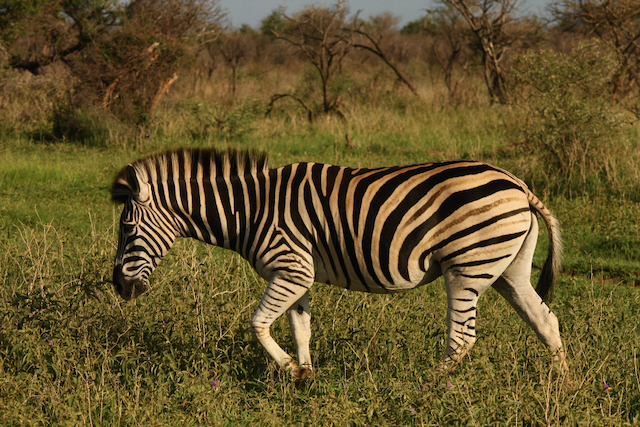
The plains zebra is one of the easiest mammals to find in Kruger National Park and is often one of the first large animals visitors encounter.
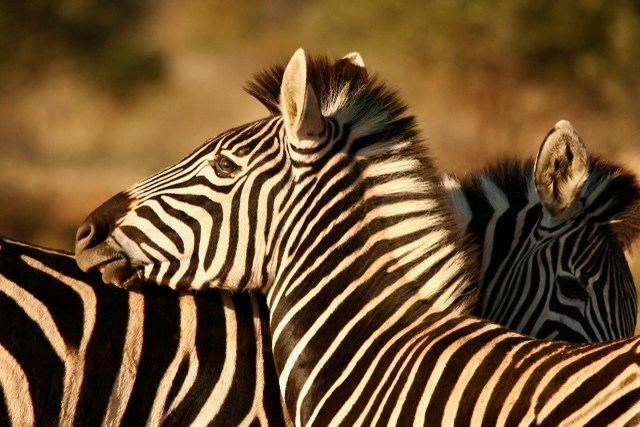
They are frequently seen grazing alongside wildebeest, impala and other antelope. These mixed herds provide extra eyes and ears to detect predators, benefiting every species involved.
Watching zebras for a while reveals just how social they are. Foals rarely stray far from their mothers, stallions constantly monitor their surroundings, and the herd moves with impressive coordination whenever danger threatens.
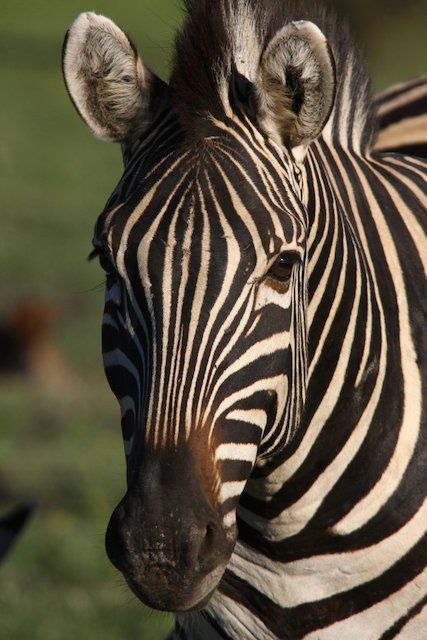
For photographers, zebras offer endless creative opportunities. A close-up portrait reveals the individuality of each stripe pattern, while a herd crossing the road at sunrise creates one of Africa’s classic safari scenes.
Nature Rarely Has Just One Answer
Scientists once searched for a single explanation for zebra stripes. Today, most believe several factors are involved.
The stripes almost certainly reduce attacks from biting flies. They may also make it harder for predators to focus on one animal during a chase, help regulate body temperature, and allow zebras to recognise one another more easily.
Evolution often favours traits that solve more than one problem, and zebra stripes appear to be a perfect example.
So, the next time you find yourself watching a herd of zebras on safari, look beyond their striking appearance. Those bold black-and-white lines are not simply beautiful—they are the product of millions of years of adaptation, helping one of Africa’s most recognisable animals survive in an ever-changing wilderness.
Sometimes the most familiar animals still have the most remarkable stories to tell.