
Vultures: Nature's Essential Clean-Up Crew
When people visit the Kruger National Park, they dream of seeing lions on a hunt, elephants crossing the road, or perhaps a leopard draped over a tree branch. Few visitors become excited about vultures soaring thousands of metres overhead or gathered around a carcass. Yet these misunderstood birds are among the most important animals in Africa.
Without vultures, the African bush would be a far dirtier, more dangerous, and less balanced ecosystem. They are nature’s sanitation department, disease control officers, and recycling specialists rolled into one.
Unfortunately, vultures are disappearing across Africa at an alarming rate. Many species have suffered dramatic population declines over the past few decades due to poisoning, collisions with powerlines, habitat loss, and illegal wildlife trade.
The Kruger National Park remains one of the last strongholds for many of these remarkable birds, making their conservation more important than ever.
Why Vultures Are So Important
Every animal in nature has a role, but vultures perform one that few others can.
When an animal dies, its carcass becomes a breeding ground for bacteria, viruses, and parasites. Left untouched, diseases such as anthrax, botulism, brucellosis, and rabies can spread rapidly through wildlife, livestock, and even humans.
Vultures solve this problem with incredible efficiency.
Their digestive systems contain extremely powerful stomach acids capable of destroying dangerous pathogens that would kill most other animals. In many cases, a group of vultures can reduce an impala carcass to bare bones in under an hour.
Instead of allowing disease to spread, they remove it from the ecosystem.
It is one of the greatest examples of natural recycling found anywhere on Earth.
Masters of Finding Food
One of the greatest mysteries visitors often ask about is how vultures find carcasses so quickly.
The answer depends on the species.
Some vultures rely on exceptional eyesight. Others watch the behaviour of fellow vultures circling overhead. Some species are particularly skilled at locating predators like lions, knowing that a successful hunt often leads to a meal.
Once one bird begins descending, others quickly notice, creating the familiar spiral of birds that safari guides use as clues when tracking predators.
Many experienced Kruger guides have found lions simply by following circling vultures.
The Seven Vulture Species Found in Greater Kruger
The Greater Kruger ecosystem supports seven species of vultures, each playing a unique role.
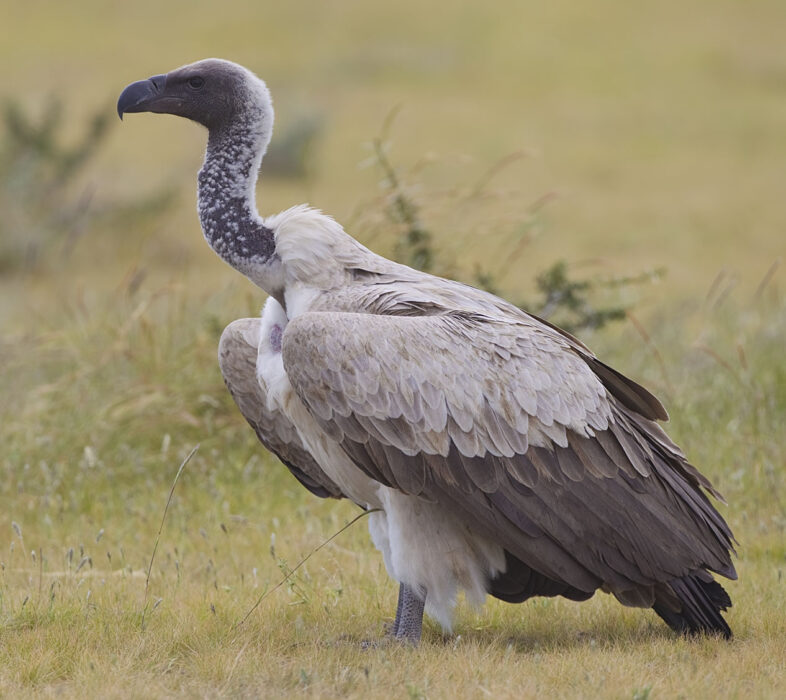
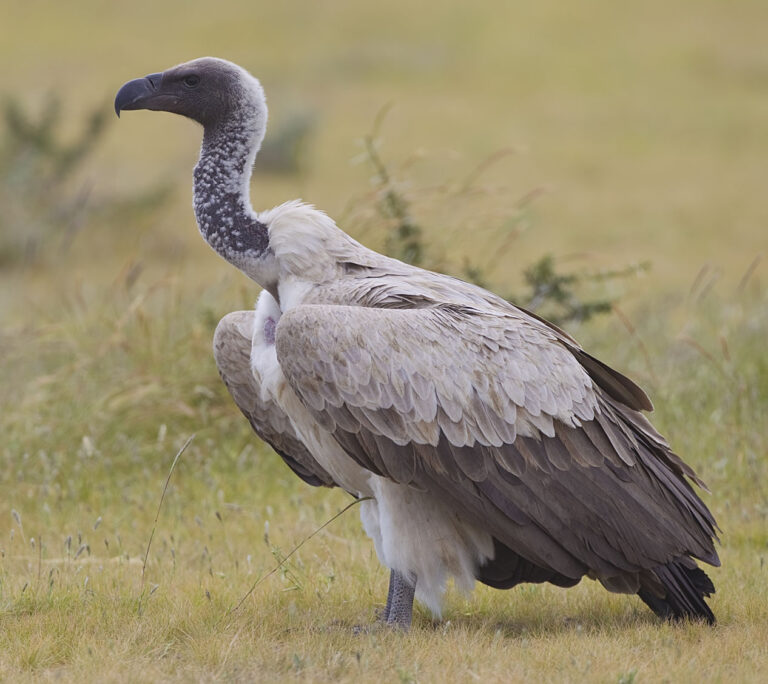
White-backed Vulture (Gyps africanus)
The White-backed Vulture is by far the most common species in Kruger and is often the first bird to arrive at a carcass.
These highly social birds breed in colonies and spend much of the day soaring on warm air currents searching for food.
Once a carcass is located, they descend in large numbers and rapidly consume the soft tissues.
Their speed is astonishing. A medium-sized antelope can disappear within minutes under hundreds of hungry birds.
Sadly, this species is now listed as Critically Endangered despite still being relatively common in Kruger.
Cape Vulture (Gyps coprotheres)
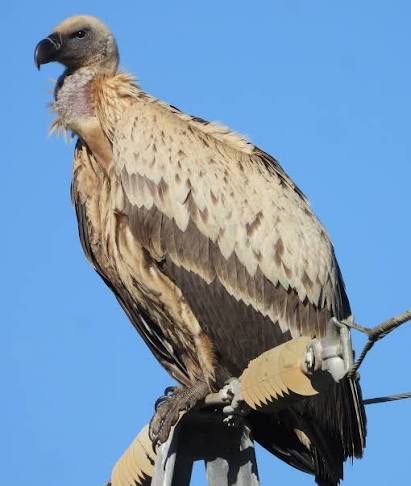
Although primarily associated with mountainous areas, Cape Vultures regularly occur within the Greater Kruger ecosystem, particularly in the western regions.
They are Africa’s largest breeding vulture and possess enormous wingspans reaching nearly 2.6 metres.
Cape Vultures travel hundreds of kilometres in search of food and often join mixed-species feeding groups.
Their numbers have declined significantly due to poisoning and collisions with powerlines.
White-headed Vulture (Trigonoceps occipitalis)
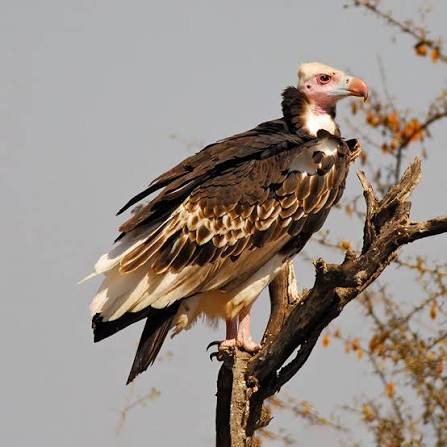
Unlike many vultures that rely on numbers, the White-headed Vulture is usually solitary or seen in pairs.
Its powerful beak allows it to tear through tougher skin before the larger Gyps vultures arrive.
This often makes it one of the first birds feeding at fresh carcasses.
It also feeds on smaller prey, reptiles, and occasionally hunts live animals.
Because it occurs at naturally low densities, sightings are considered very special.
The White-headed Vulture is listed as Critically Endangered.
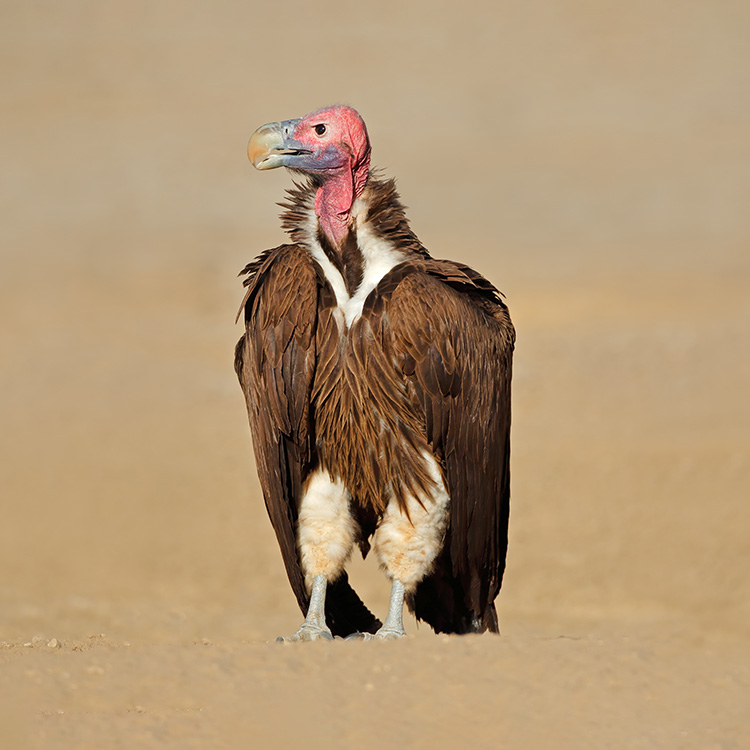
Lappet-faced Vulture (Torgos tracheliotos)
Often referred to as the king of African vultures, the Lappet-faced Vulture is the largest species regularly found in Kruger.
With an enormous beak capable of tearing through thick elephant or buffalo hide, it performs a critical role by opening carcasses that smaller vultures cannot access. Without these giants, many carcasses would remain inaccessible to other scavengers.
Their feeding often begins the entire scavenging process. Despite their size, they are one of Africa’s rarest vultures.
Hooded Vulture (Necrosyrtes monachus)
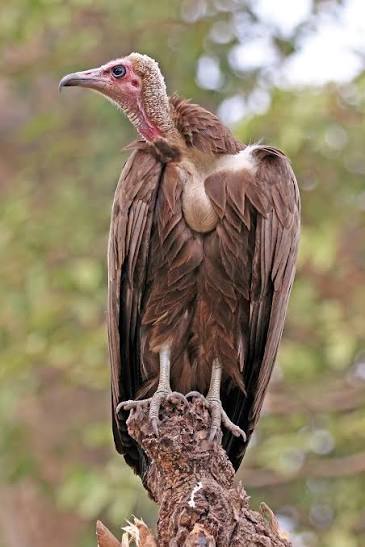
The Hooded Vulture is considerably smaller than the other species.
Its slender bill allows it to feed on tiny scraps of meat left behind by larger vultures. Think of them as nature’s detail cleaners. Nothing goes to waste.
Hooded Vultures also consume insects, small reptiles, and other organic material, helping clean up even the smallest remains. This species has experienced catastrophic declines across Africa and is now Critically Endangered.
Egyptian Vulture (Neophron percnopterus)
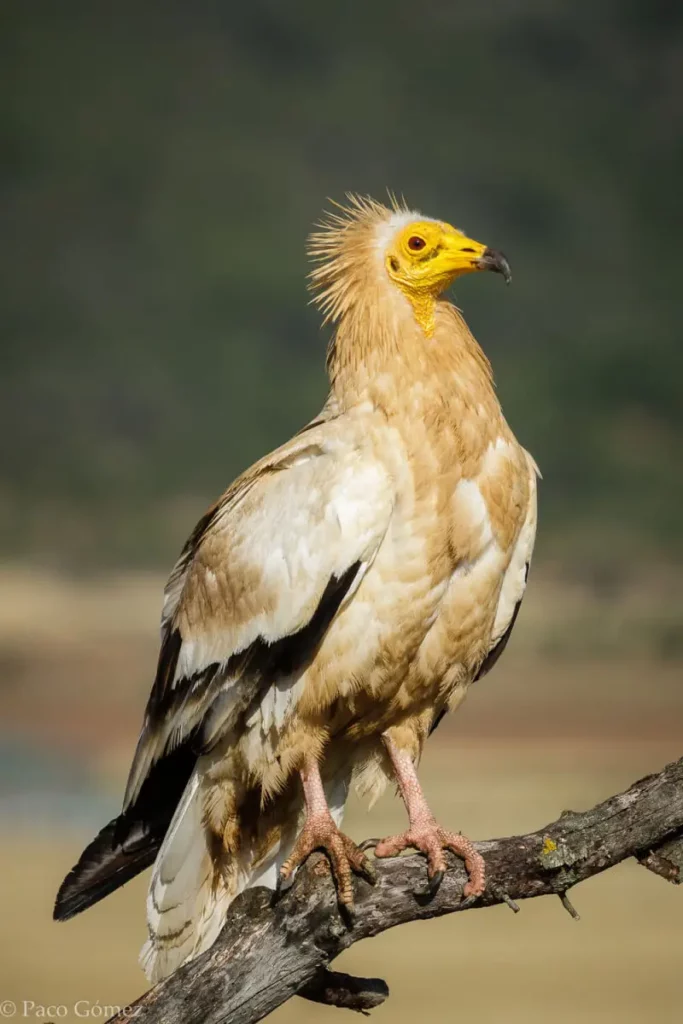
The Egyptian Vulture is the rarest vulture seen in Kruger. It is easily recognised by its smaller size and distinctive yellow facial skin. Remarkably, this species is one of the very few birds known to use tools. In other parts of Africa, Egyptian Vultures have been observed throwing stones at ostrich eggs to crack them open. Although only occasionally recorded in the Greater Kruger region, every sighting is considered exceptional.
Palm-nut Vulture (Gypohierax angolensis)
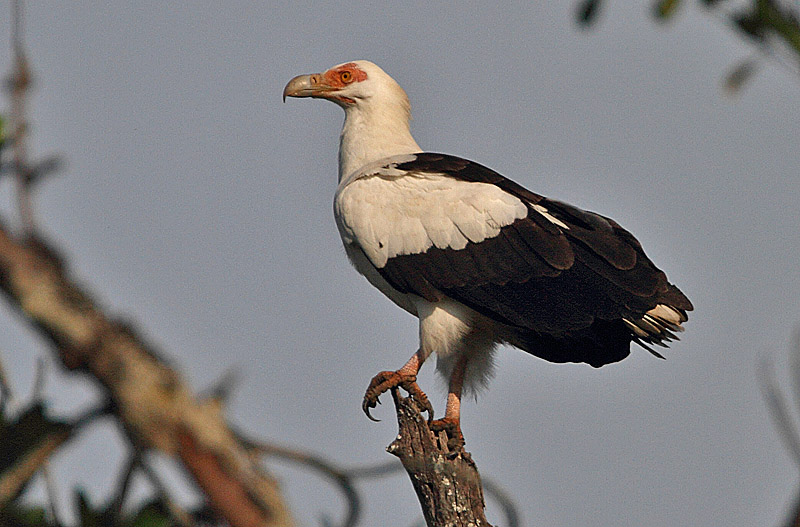
Unlike every other African vulture, the Palm-nut Vulture has a surprisingly unusual diet. Despite being classified as a vulture, much of its food consists of the fruit of oil palms and raffia palms. However, where available, it also scavenges carrion, fish, crabs, and other small animals. This species is only an occasional visitor to parts of the Lowveld and is considered rare within the Greater Kruger ecosystem.
Working Together With Other Scavengers
Many visitors assume vultures compete with hyenas, jackals, and lions.
In reality, they form part of a highly organised scavenger community.
Each species specialises in different parts of the carcass.
Lions make the kill.
Hyenas crush bones.
Lappet-faced Vultures open thick hides.
White-backed Vultures remove large quantities of flesh.
White-headed Vultures tackle tougher tissues.
Hooded Vultures clean up tiny scraps.
Jackals finish what remains.
Finally, insects, beetles, bacteria, and fungi recycle the rest back into the soil.
Nothing is wasted.
Nature operates with extraordinary efficiency.
Threats Facing Africa’s Vultures
Despite their ecological importance, vultures face numerous dangers.
Poisoning
Poisoning remains the greatest threat.
Sometimes predators are intentionally poisoned by livestock farmers. When vultures feed on these carcasses, hundreds can die in a single incident.
Even more devastating are elephant and rhino poaching events.
Poachers deliberately poison carcasses to kill vultures because circling birds attract anti-poaching aircraft and rangers.
One poisoned elephant can kill hundreds of vultures.
Powerlines and Wind Farms
Large soaring birds are vulnerable to collisions with powerlines.
Electrocution and impacts kill thousands across southern Africa every year.
Poorly placed wind turbines also pose an increasing threat in certain regions.
Traditional Medicine
In some parts of Africa, vultures are illegally harvested for traditional medicine and belief-based uses.
Because vultures are thought to possess supernatural vision, their body parts are sometimes sold in illegal wildlife markets.
This practice has contributed significantly to population declines.
Habitat Loss
Large nesting trees continue to disappear outside protected areas.
Human disturbance near nesting sites also reduces breeding success.
Since vultures produce very few chicks each year, populations recover extremely slowly.
Why Kruger Is So Important
The Greater Kruger ecosystem provides one of Africa’s largest protected landscapes.
Its abundant wildlife supplies natural food sources, while extensive wilderness offers relatively safe nesting and breeding habitat.
Conservation organisations actively monitor nesting colonies, satellite-track birds, establish “vulture restaurants” (safe feeding sites), and work with neighbouring communities to reduce poisoning incidents.
Even so, Kruger’s vultures cannot survive in isolation.
Many travel hundreds of kilometres beyond park boundaries, exposing them to numerous threats.
Their conservation depends on cooperation across southern Africa.
How Visitors Can Help
Every safari guest has an opportunity to contribute to vulture conservation.
Support lodges and operators that promote responsible wildlife tourism.
Report injured or poisoned birds immediately to park authorities.
Avoid disturbing nesting colonies.
Never leave litter or hazardous materials in protected areas.
Most importantly, appreciate vultures for the extraordinary role they perform.
Rather than looking away when you see them feeding, spend a few minutes observing the remarkable efficiency of nature’s clean-up crew.
It is one of the greatest wildlife spectacles that many visitors overlook.
A Sky Full of Guardians
Vultures may never win a beauty contest.
They lack the charisma of lions, the elegance of leopards, or the popularity of elephants.
Yet few animals contribute more to the health of Africa’s ecosystems.
Every soaring silhouette above Kruger represents a guardian of the wilderness—a bird silently preventing disease, recycling nutrients, and keeping the ecosystem functioning exactly as nature intended.
The next time you notice vultures circling high above the African bush, don’t dismiss them as simply scavengers.
They may be leading you to your next incredible wildlife sighting, but more importantly, they are performing one of nature’s most vital jobs.
Without vultures, Africa would be a far less healthy place. Their survival is not just important for wildlife—it is essential for the future of the entire ecosystem.