The Secret Language of Birds That Warns Other Animals
Imagine you’re driving through Kruger National Park on what seems like a quiet morning. The roads are empty, the grass is still, and there isn’t a predator in sight. Then, suddenly, a loud chorus of birds erupts from a nearby thicket. A fork-tailed drongo begins calling sharply from the top of a tree. A group of hornbills becomes agitated, and a few francolins dash into cover.
To many visitors, it’s simply birds making noise.
To an experienced safari guide, it’s one of the clearest signs that something important is happening.
Birds are among the most vocal and observant animals in the African bush. Long before you see a lion, leopard, or snake, the birds often know it’s there. Their alarm calls create an intricate communication network that not only warns other birds but also alerts mammals such as impalas, mongooses, vervet monkeys, warthogs, and even humans who know how to listen.
This hidden language is one of the greatest secrets of the African bush. Once you begin to understand it, your entire safari experience changes.
Nature’s Early Warning System
Every day, thousands of animals depend on one another to survive. While each species has its own strengths, none can watch every direction all the time.
Birds have several advantages.
Many species spend their day perched high in trees, giving them excellent visibility across the landscape. Others move constantly through the bush, searching for insects, seeds, or fruit. Their elevated position and constant vigilance make them among the first animals to detect danger.
The moment they spot a predator, they react immediately.
Some freeze.
Others fly away.
Many begin calling loudly.
These alarm calls spread rapidly through the surrounding bush, creating a ripple effect that alerts countless other animals.
For prey species, a few seconds’ warning can mean the difference between life and death.
Not All Alarm Calls Mean the Same Thing
One of the most fascinating discoveries in animal behaviour is that alarm calls are often highly specific.
Birds don’t simply shout, “Danger!”
Different predators create different responses.
A perched martial eagle may produce one type of alarm.
A stalking leopard may trigger another.
A snake moving through the grass can produce an entirely different reaction.
Many animals have learned to interpret these differences.
Research has shown that mammals frequently respond appropriately even when the warning comes from another species. An impala may lift its head and scan the bush after hearing a bird’s alarm call without ever seeing the predator itself.
This sharing of information creates a remarkable survival network across multiple species.
The Fork-tailed Drongo: The Bush’s Loudest Gossip
If there were an official town crier of the African bush, it would almost certainly be the fork-tailed drongo.
Small, glossy black, and incredibly intelligent, drongos spend much of their day perched on exposed branches where they have an excellent view of their surroundings.
They are famous for giving loud alarm calls whenever predators appear.
But the drongo has another remarkable talent.
It has learned to imitate the alarm calls of many other species.
Sometimes it genuinely warns everyone of danger.
Other times, it uses fake alarm calls to trick animals into dropping their food, allowing the drongo to swoop down and steal an easy meal.
Scientists studying drongos have recorded them mimicking dozens of different species, including meerkats and other birds. If one alarm call stops working because animals ignore it, the drongo simply changes its “voice” and imitates another species instead.
It’s one of the most sophisticated examples of deception ever documented in the animal kingdom.
Go-away Birds: The Bush’s Watchmen
Many visitors laugh the first time they hear a grey go-away bird.
Its distinctive call sounds remarkably like someone saying “go away!”
These birds are often noisy, restless, and highly alert.
Because they spend much of their time feeding in trees while keeping an eye on their surroundings, they are excellent predator detectors.
When disturbed by leopards, snakes, or large raptors, they often become extremely vocal.
Experienced guides pay close attention whenever go-away birds suddenly become agitated, especially if the calls are concentrated in one location rather than spread across the bush.
Hornbills: More Than Entertainers
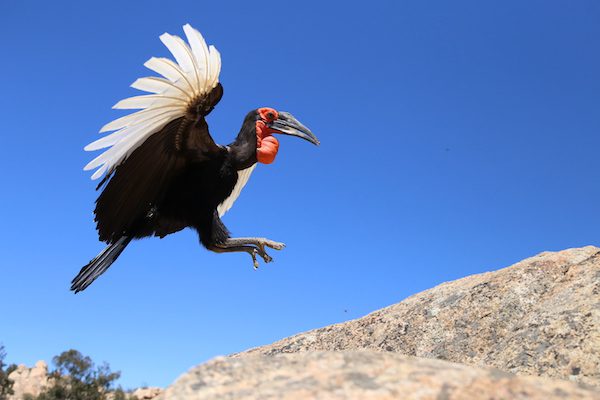
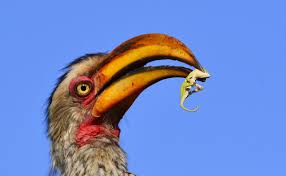
Southern yellow-billed hornbills and southern red-billed hornbills are favourites among safari guests.
They’re charismatic, curious, and often seen hopping around camps or roadsides.
But they also serve another purpose.
Hornbills regularly react to predators by calling loudly and flying into nearby trees.
Their sudden behaviour change can draw attention to hidden dangers that might otherwise remain invisible.
A normally relaxed hornbill becoming tense and vocal is often worth investigating.
Francolins: Ground-Level Security Guards
Unlike birds perched high in trees, francolins spend most of their lives on the ground.
Because they share the same environment as many predators, they are excellent indicators of movement through the grass.
A startled francolin exploding into flight is something every guide notices.
If several francolins begin calling repeatedly while running through thick vegetation, there’s often a reason.
It could be a snake.
It could be a jackal.
Or it could be something much larger moving silently nearby.
Oxpeckers: Tiny Birds with Big Information
Red-billed and yellow-billed oxpeckers spend much of their lives riding buffalo, rhinos, giraffes, and other large mammals.
Most people know them for eating ticks.
Far fewer realise they also act as an early warning system.
Because they constantly scan their surroundings, oxpeckers often become agitated when predators approach.
Buffalo sometimes react to the birds’ sudden behaviour long before they detect danger themselves.
This partnership benefits both species.
The mammals receive parasite removal.
The birds gain food and protection.
Both benefit from improved predator detection.
Vervet Monkeys Listen Too
The communication network doesn’t stop with birds.
Vervet monkeys possess one of the most sophisticated alarm systems known among mammals.
They use different calls for:
- Leopards
- Eagles
- Snakes
What’s remarkable is that birds often respond to monkey alarm calls.
Likewise, monkeys frequently react to bird alarms.
The result is a constantly evolving web of shared information stretching across the African bush.
Every species contributes something.
Every species benefits.
Reading the Bush Like a Guide
Professional guides rarely search randomly.
Instead, they constantly collect information from dozens of small clues.
Bird calls are among the most valuable.
Imagine hearing several drongos calling repeatedly while nearby impalas stand frozen, staring into thick vegetation.
A few metres away, hornbills suddenly fly into nearby trees.
Nothing may be visible.
Yet these combined clues strongly suggest a predator is present.
Instead of driving away, an experienced guide slows down, watches carefully, and waits.
Many incredible sightings begin exactly this way.
Why Silence Can Be Just as Important
Interestingly, the absence of bird calls can also reveal valuable information.
When a large predator settles down to rest for several hours, birds often return to normal behaviour.
The bush becomes calm again.
On the other hand, sudden silence where birds were previously active may indicate that something has entered the area.
Experienced guides learn to recognise both sound and silence.
The bush is constantly speaking.
Sometimes it whispers.
Sometimes it shouts.
Can You Learn This Skill?
Absolutely.
Like any language, it takes practice.
Instead of focusing only on large mammals during your next safari, spend time listening.
Notice which birds call repeatedly.
Watch where they’re looking.
Observe whether nearby impalas or monkeys react.
Ask your guide why certain birds suddenly became noisy.
Over time, you’ll begin recognising patterns.
Eventually, you’ll start predicting wildlife sightings before they happen.
That’s when safari becomes far more than simply spotting animals.
You begin understanding the ecosystem itself.
Every Animal Has a Story to Tell
Many visitors arrive in Africa hoping to see lions, leopards, elephants, or rhinos.
These iconic animals deserve every bit of their reputation.
But some of the most fascinating wildlife experiences involve the smallest creatures.
A tiny drongo warns the bush.
A hornbill sounding an alarm.
A francolin exploding from the grass.
These moments remind us that every species plays an important role in the complex web of life.
The African bush is not a random collection of animals living side by side.
It is a connected community where information flows constantly between species.
Those who learn to listen gain access to a hidden world that most visitors never realise exists.
Experience the Bush Through the Eyes of a Professional Guide
At Intrepid Odyssey, every safari is about more than simply finding the Big Five. It’s about understanding the incredible relationships that make the African wilderness so captivating.
With more than two decades of guiding experience, we help guests interpret the subtle signs that reveal what is happening beyond the obvious. From the alarm call of a drongo to the nervous stare of an impala, every clue adds another piece to the puzzle.
The next time you’re in Kruger National Park, don’t just look for wildlife.
Listen.
The birds may already be telling you exactly where to find it.