The Legendary Baobab: Africa’s Ancient Tree of Life
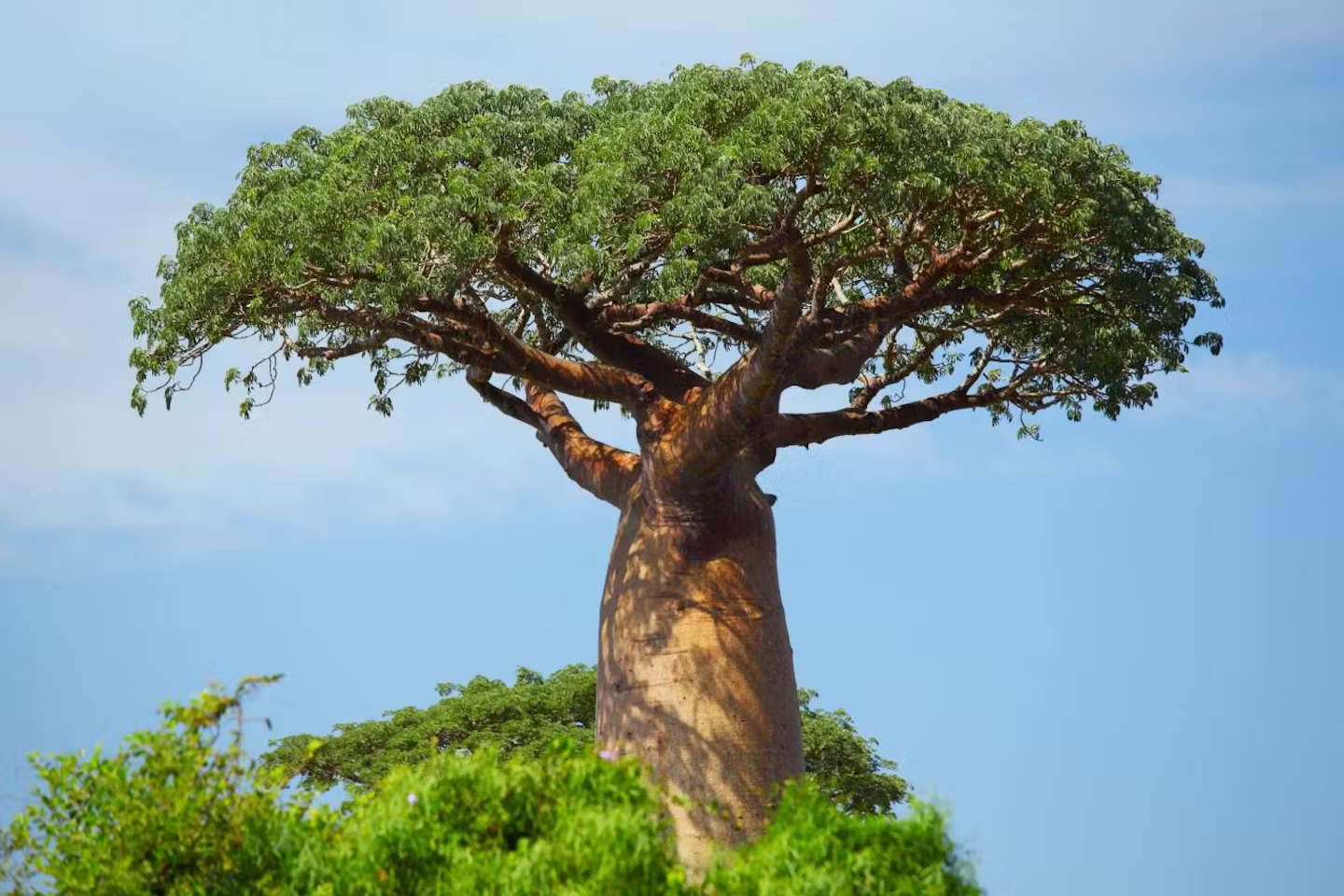
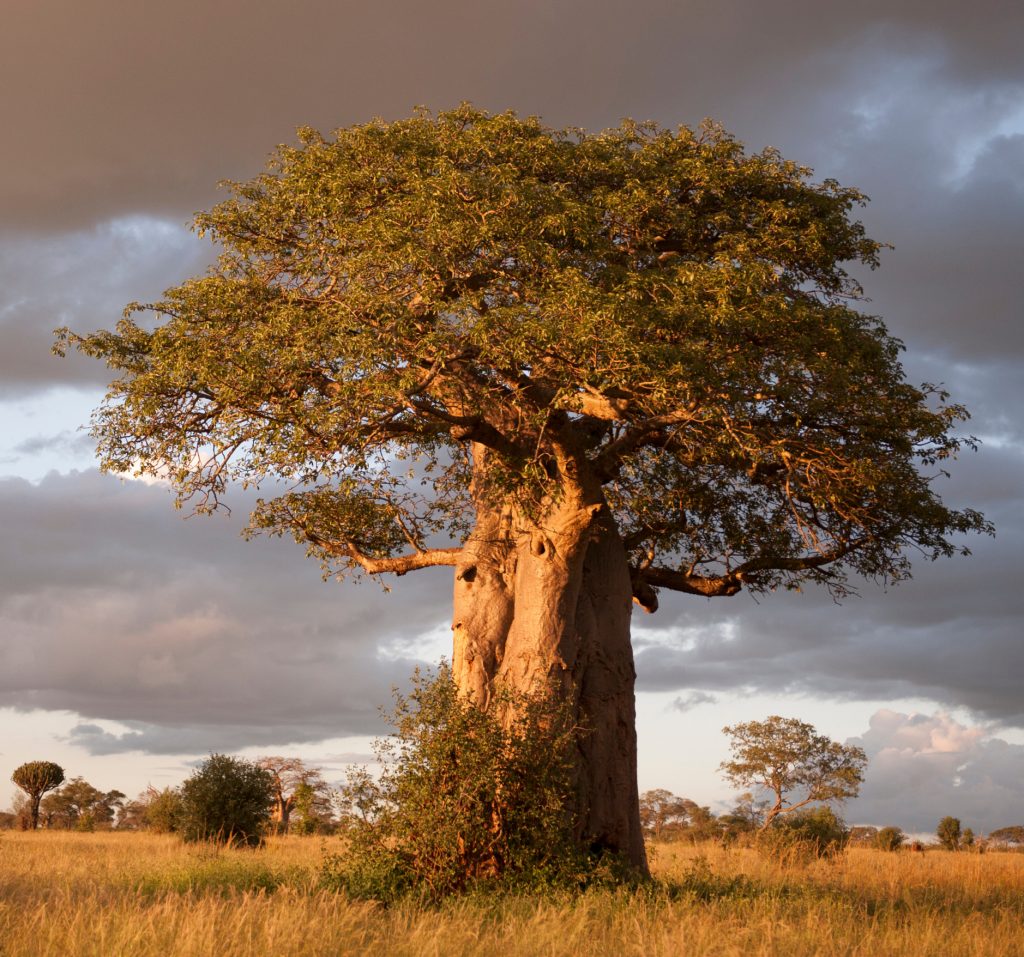
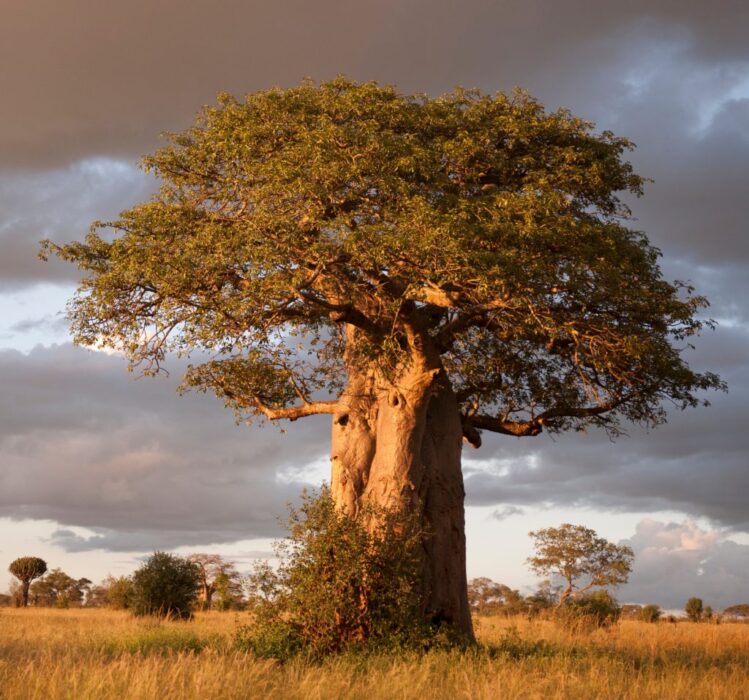
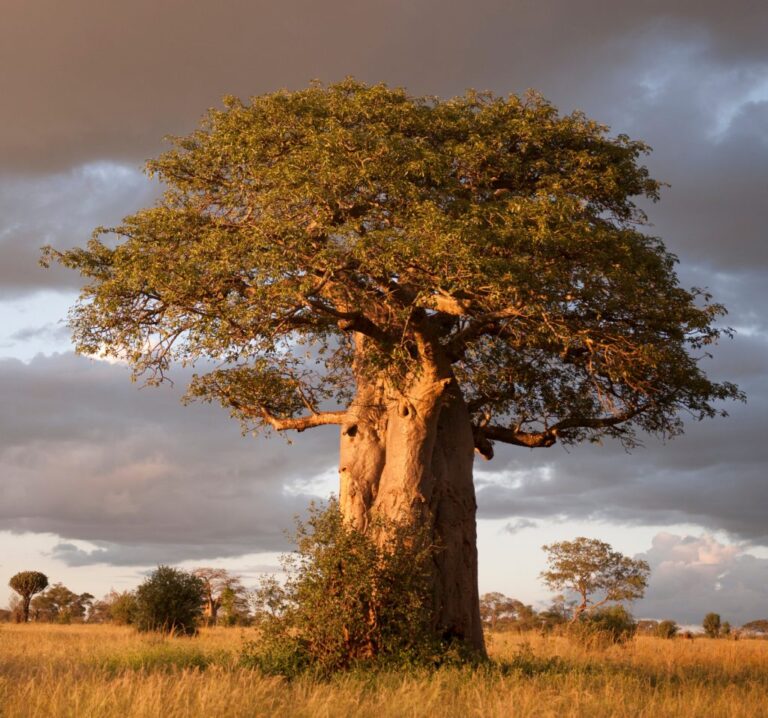
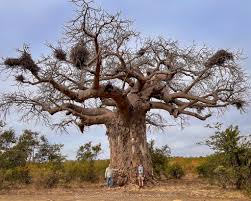
Few trees on Earth command the same sense of wonder, myth, and ecological importance as the African baobab. Rising like natural monuments from the savannas, deserts, and woodlands of sub-Saharan Africa, baobabs are instantly recognisable: massive, swollen trunks; sparse branches that look like a root system turned upside-down; and an aura of permanence that has earned them the nickname “The Tree of Life.”
This blog explores the fascinating world of the baobab—its ecology, cultural significance, biology, adaptations, uses, folklore, and the conservation challenges it faces today.
A Tree Shaped by Myth and Time
The baobab (genus Adansonia) has eight recognised species globally, six of which are native to Madagascar, one to Australia, and one—Adansonia digitata—native to mainland Africa. It is this African species that most people picture when they think of a baobab.
One of the reasons baobabs invite myth is their strange architecture. Many African stories say that God, angered by the baobab’s pride, uprooted it and replanted it upside-down, leaving its “roots” waving in the sky. Others say the tree houses spirits or serves as a gateway between the human and ancestral world. In parts of West and Southern Africa, sacred baobabs function as community gathering sites, shrines, and even tombs.
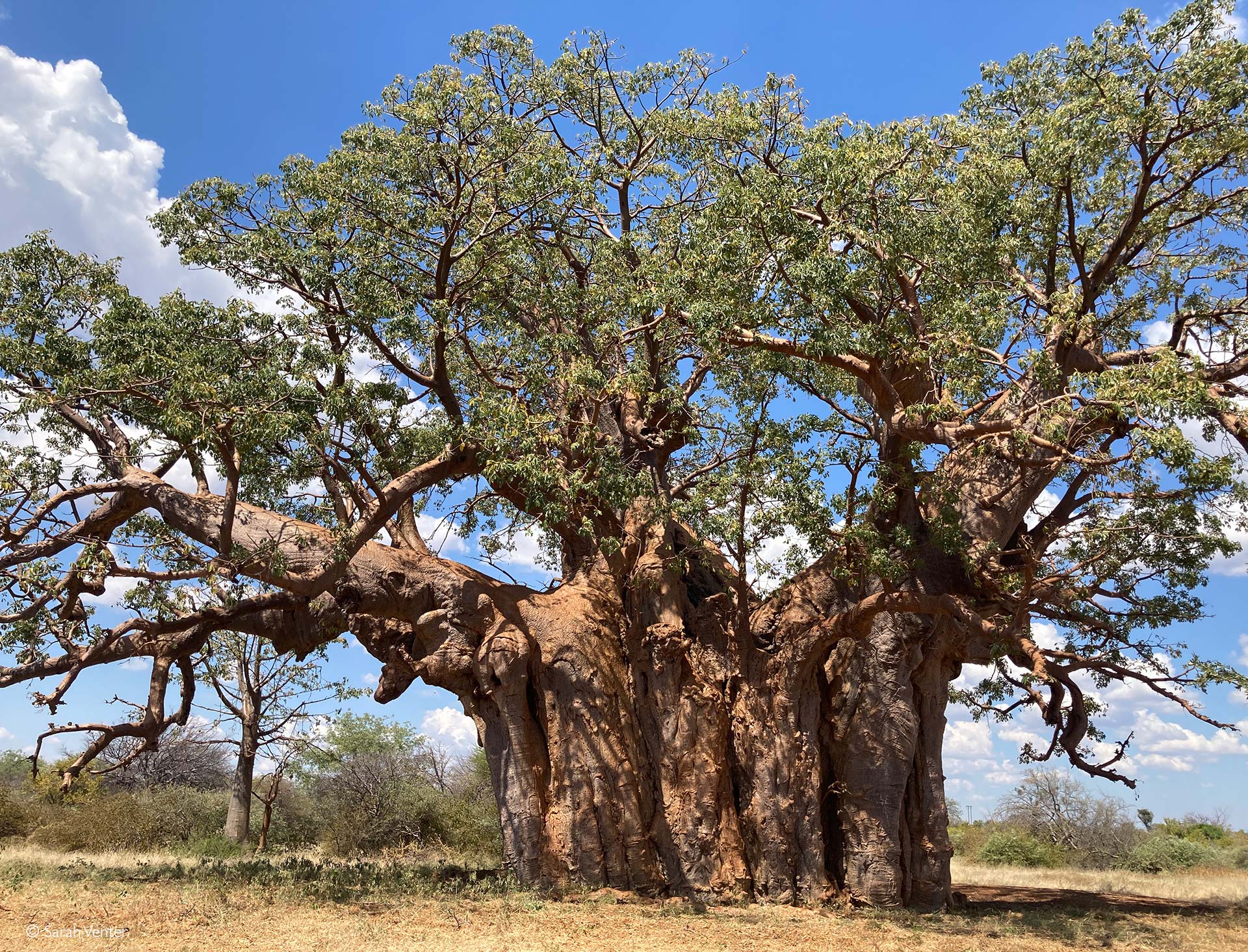
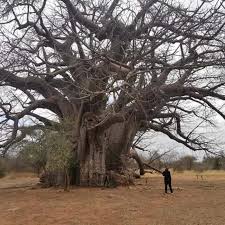
These stories arise for good reason: baobabs look ancient, almost primeval. Some specimens are believed to exceed 2,000 years in age, making them among the oldest living organisms on the continent. Their size alone inspires awe—trunks often reach 10–14 meters in diameter, with some exceptional giants stretching beyond 20 meters.
But their longevity and bulk are more than curiosities—they are critical survival adaptations.
Botanical Marvel: How Baobabs Thrive in Harsh Lands
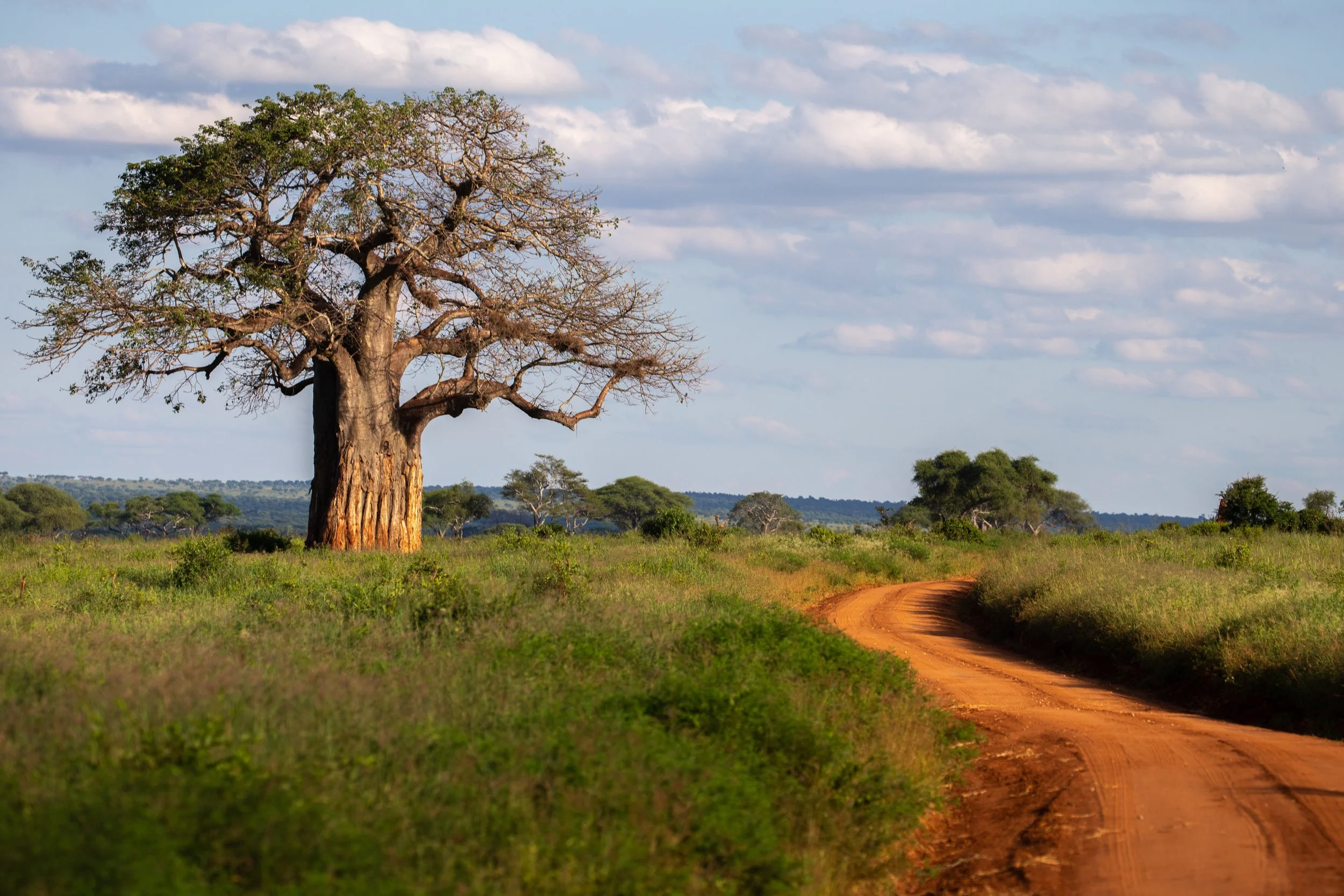
The African baobab is a master of surviving extremes. It grows in regions with long droughts, erratic rainfall, and poor soil fertility. To persist in such conditions, baobabs evolved a suite of extraordinary traits.
1. A Trunk Built to Store Water
Baobab wood isn’t like typical hardwood. It is fibrous, spongy, and highly absorbent, allowing the tree to store thousands of litres of water during the rainy season. This stored reservoir sustains it through months of drought, and it’s the reason baobabs appear swollen or bottle-shaped.
During the dry season, the trunk actually shrinks slightly as the tree uses up its internal reserves.
2. Remarkable Drought Tolerance
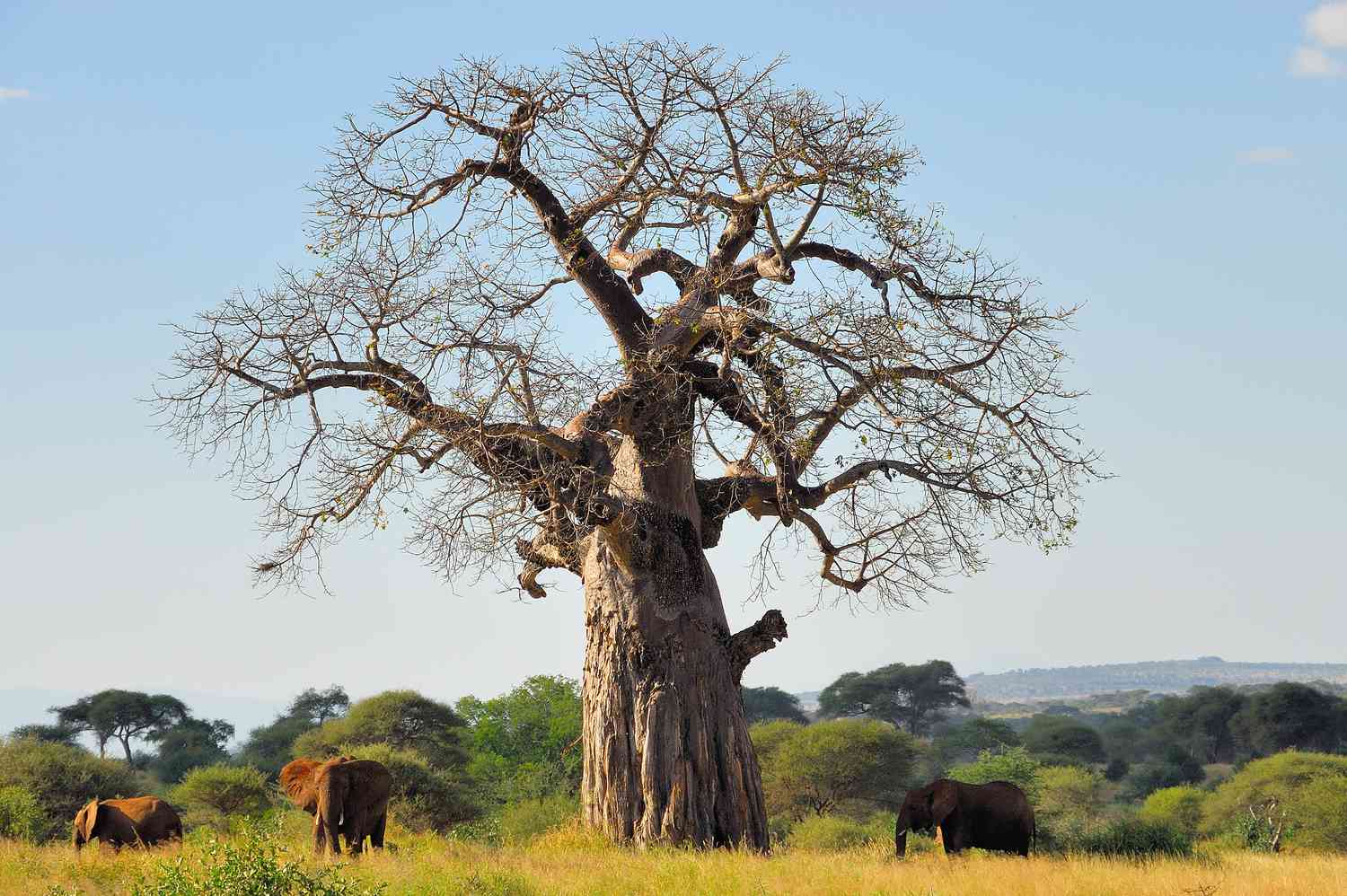
A baobab’s leaves are small, compound, and shed during the dry season—another adaptation to minimize water loss. The tree goes leafless for up to eight months, conserving moisture and energy, relying on its extensive root system and stored water.
3. Night-Blooming Flowers
Among the tree’s most enchanting features are its huge, white, pendulous flowers that open at dusk. Their strong musky scent attracts nocturnal pollinators—especially fruit bats (flying foxes). In some regions, hawkmoths and bushbabies also assist.
The flowers last only one night, wilting by morning, but they are vital for maintaining baobab populations.
4. Resilience to Fire and Human Use
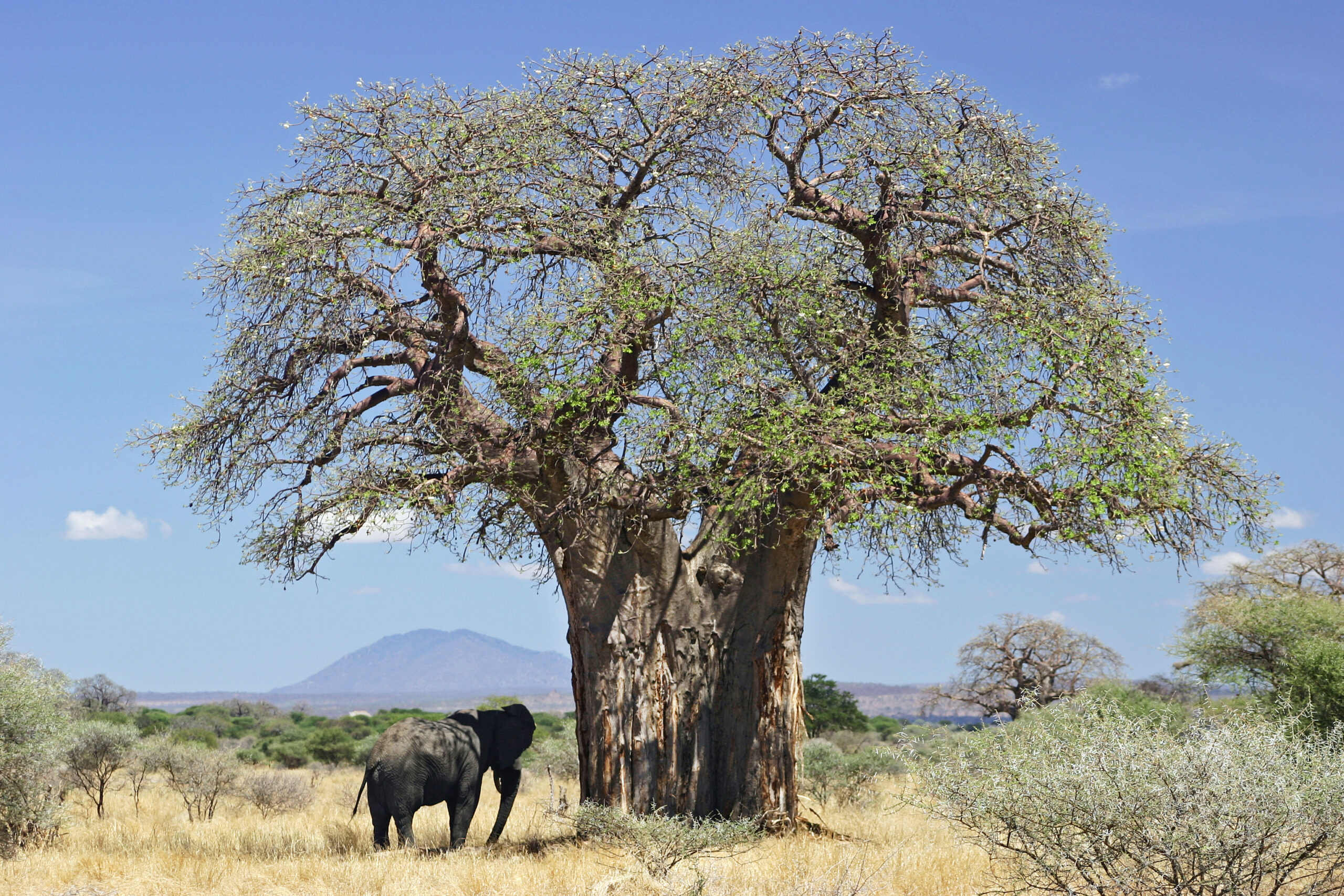
Thanks to its soft, moist trunk, the baobab is largely fire-resistant. Even when elephants strip bark or humans carve into it to harvest fibre, the baobab usually survives and eventually heals. Few trees can endure such stress.
5. Longevity Through Hollowness
Interestingly, many old baobabs develop hollow trunks—not because they are rotting away, but because the inner wood disintegrates naturally with age. The tree remains healthy because its vascular tissue is located in the outer layers. These hollows historically served as shelters, grain stores, prisons, post offices, bars, and even chapels.
Ecological Importance: Why Baobabs Are “Trees of Life”
The baobab supports entire ecosystems. Its role in African landscapes is profound:
1. A Keystone Food Source
Baobabs produce fruit during the dry season when food is scarce. Many species rely on it, including:
- Elephants
- Baboons
- Monkeys
- Birds
- Antelope
- Fruit bats
Even honeybees depend on baobab flowers for nectar.
The fruit pulp is rich in vitamin C, antioxidants, fiber, and minerals. The leaves, bark, flowers, and seeds all serve as food for wildlife at different times of the year.
2. Habitat and Shelter
The tree’s huge canopy and trunk cavities become homes for birds, insects, reptiles, and small mammals. Owls, hornbills, bushbabies, genets, and bats frequently roost in baobabs.
3. Soil Enrichment
Fallen leaves decompose quickly, replenishing nutrient-poor soils. The tree’s presence improves the fertility of surrounding land, supporting healthier vegetation.
4. Cultural Ecosystems
Beyond ecological roles, baobabs shape human landscapes. Villages often grow around them. They provide shade, meeting places, and landmarks. Their presence has influenced settlement patterns for generations.
Human Uses: A Generous Provider
Almost every part of the baobab is useful. Across Africa, the tree has earned the title “The Tree of Life” because of its many benefits.
1. Baobab Fruit (“Monkey Bread”)
The fruit is a hard, velvety pod filled with tangy, nutritious pulp and oil-rich seeds.
Nutritional highlights:
- 6x more vitamin C than oranges
- High in antioxidants
- Excellent source of fiber
- Contains calcium, magnesium, potassium, and iron
The dried pulp is eaten raw, used in drinks, or incorporated into porridges and sauces. Today it has become a global “superfood” in smoothies and health products.
2. Leaves
Young leaves are rich in protein, iron, and minerals. In many African cultures, they are cooked similarly to spinach or dried and ground into a powder used in soups and sauces.
3. Seeds and Oil
Baobab seeds can be roasted and eaten or pressed to produce a light, nutrient-rich oil used in cosmetics and cooking.
4. Bark
Baobab bark is tough yet fibrous. Historically, it was used for:
- Rope
- Fishing nets
- Mats
- Cloth
- Storage baskets
The outer bark regenerates even after harvesting, making baobab fibre a sustainable resource.
5. Wood and Shelter
The spongy wood is not commonly used for construction, but hollow trunks have served practical purposes for centuries:
- Water storage containers
- Safehouses
- Stores for food or valuables
- Sites for religious rituals
- Meeting or storytelling rooms
Some baobabs have even hosted informal pubs and shops in rural communities.
6. Traditional Medicine
African herbalists use baobab bark, leaves, and fruit for various remedies:
- Treating fever
- Managing digestive issues
- Supporting immune health
- Reducing inflammation
- Skin treatments
Though scientific evidence varies, many communities continue to rely on these practices.
Cultural, Spiritual, and Historical Significance
Across Africa, baobabs are woven into identity and heritage.
1. Spiritual Symbolism
In many regions, baobabs are revered as sacred. They symbolize:
- Longevity
- Wisdom
- Community
- Protection
- Ancestral presence
Some tribes believe spirits live within the tree, while others pray or make offerings beneath its canopy.
2. Landmarks and Community Centers
Before modern infrastructure, rural societies used baobabs as places for:
- Resolving disputes
- Teaching children
- Dancing and ceremonies
- Sharing stories at night
- Holding markets
The tree’s presence often marks important historical events or burial sites.
3. Storytelling Traditions
Many African folktales feature baobabs. Among the most common are:
- Creation myths explaining its inverted shape
- Stories of the baobab granting wisdom
- Tales linking the tree to animals like hyenas, lions, and elephants
These stories help pass down cultural values and ecological knowledge.
Threats and Conservation Challenges
Despite their resilience, baobabs face growing threats.
1. Climate Change
The biggest concern is warming temperatures and shifting rainfall patterns. In recent decades, some of Africa’s oldest baobabs have died unexpectedly. Scientists believe drought stress may weaken the trees, making them more vulnerable to disease and collapse.
2. Habitat Loss
Agricultural expansion, urbanisation, and deforestation reduce the number of baobabs in many regions. Young baobabs struggle to grow when grazing animals—especially goats—eat their shoots.
3. Unsustainable Harvesting
While baobab fibre and fruit can be harvested sustainably, overharvesting or bark stripping can damage trees.
4. Elephants
In some areas, elephant populations put heavy pressure on baobabs by stripping large sections of bark, sometimes killing the trees. Normally, baobabs recover, but climate stress makes recovery more difficult.
Conservation Efforts and Hope for the Future
The good news is that baobabs are receiving renewed attention.
1. Community-Based Conservation
Local communities in countries like Malawi, Tanzania, and South Africa are working with NGOs to plant baobab saplings, regulate fruit harvesting, and protect young trees from livestock.
2. Scientific Monitoring
Researchers are studying why some ancient baobabs have died and what conditions are necessary for their long-term survival.
3. Sustainable Baobab Economies
As global demand for baobab products grows, certification schemes help ensure that fruit is harvested sustainably, providing income to rural communities without damaging the trees.
4. Protected Areas
Many national parks and reserves across Africa protect baobab landscapes, ensuring these ancient giants remain part of Africa’s future.
Why the Baobab Endures in Our Imagination
The baobab is more than a tree. It is:
- A monument of time
- A symbol of resilience
- A provider of food, medicine, and shelter
- A centerpiece of culture and community
- A keystone of ecosystems
- A living reminder of Africa’s past and a vital part of its future
Standing beneath a baobab, you feel its presence. Its trunk carries centuries of rain, drought, wind, and human stories. Its branches reach like roots into the evening sky. And its fruit and leaves continue to nourish life long after its flowers have faded.
In a rapidly changing world, the baobab reminds us of endurance, adaptation, and the deep connection between people and nature.