How Crocodiles Hunt: The Ancient Art of Ambush
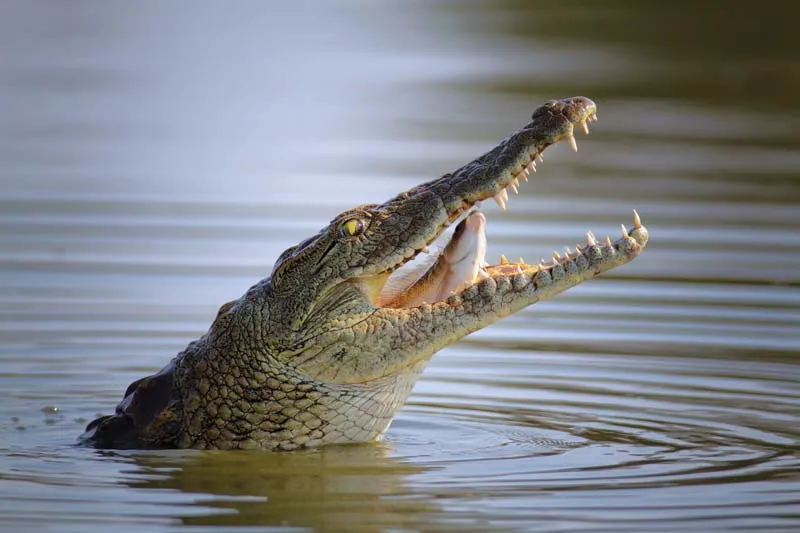
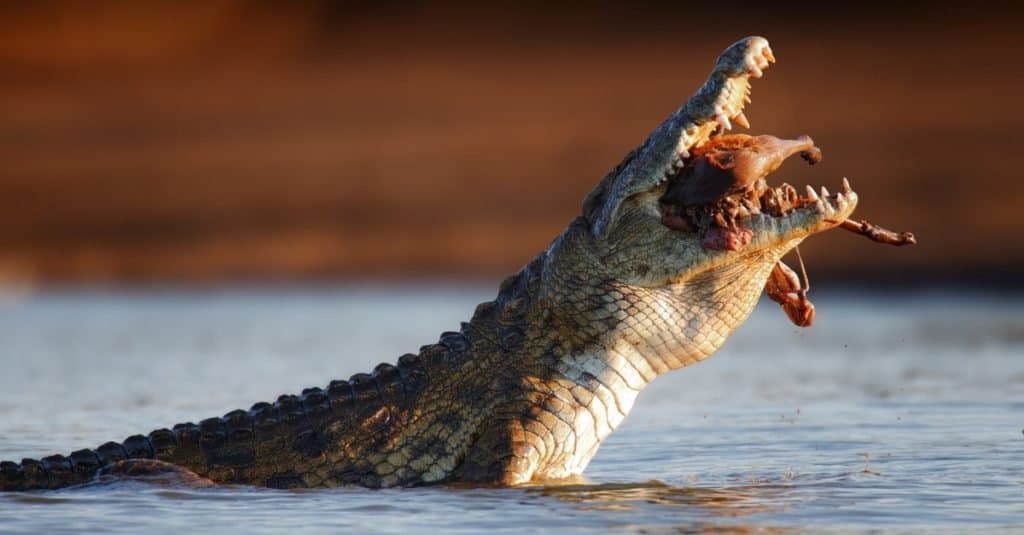
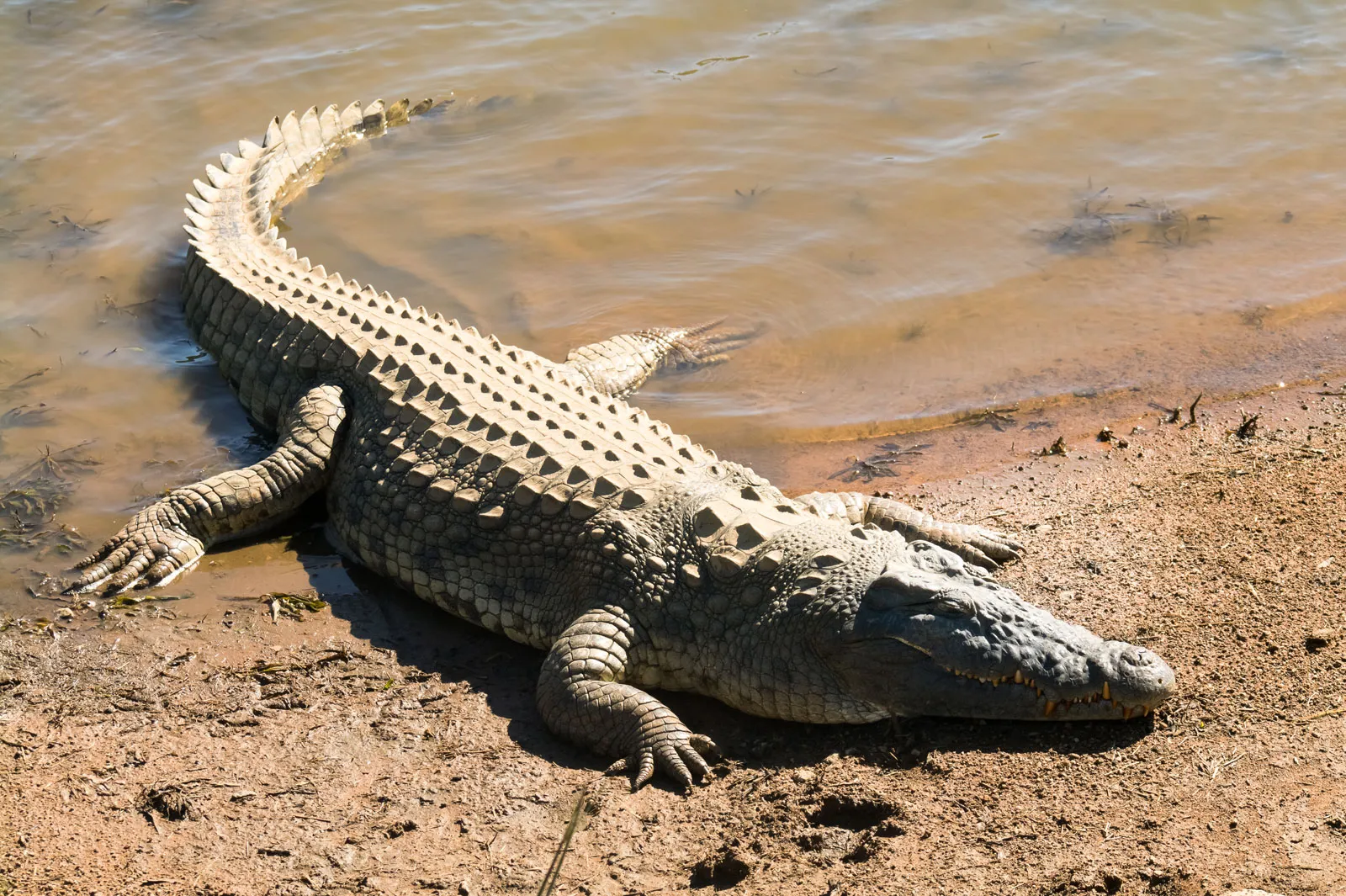
There are few animals in Africa that can make you stop and look quite like a crocodile. At first glance, a large crocodile lying motionless on a riverbank hardly seems like much of a predator. It may sit in exactly the same spot for hours, barely moving, while birds walk around it and animals come down to drink. But that apparent laziness is deceptive. Beneath the stillness is a highly specialised hunter that has perfected the art of patience.
Crocodiles have been around for millions of years, and their basic body design has changed remarkably little. There is a good reason for that. The crocodile’s combination of stealth, patience, powerful jaws and explosive movement is incredibly effective. Unlike a cheetah, it does not need to chase its prey. Unlike wild dogs, it does not need to work as part of a pack. Instead, it waits for the right opportunity and lets the prey come to it.
For anyone who has watched crocodiles in the wild, particularly around the rivers and dams of the Kruger region, understanding how they hunt makes these ancient reptiles even more fascinating.
Built for an Ambush
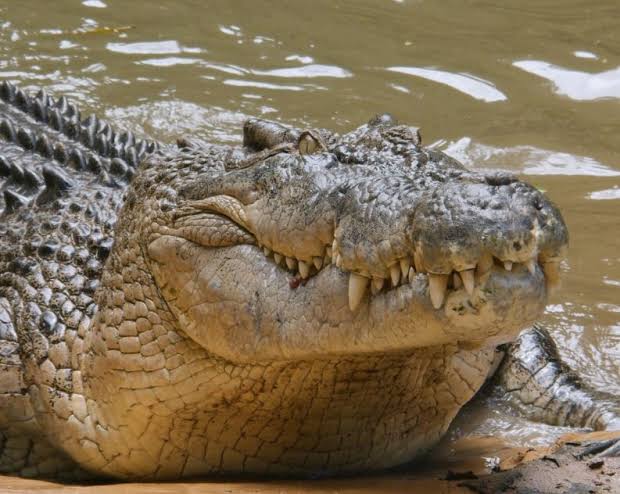
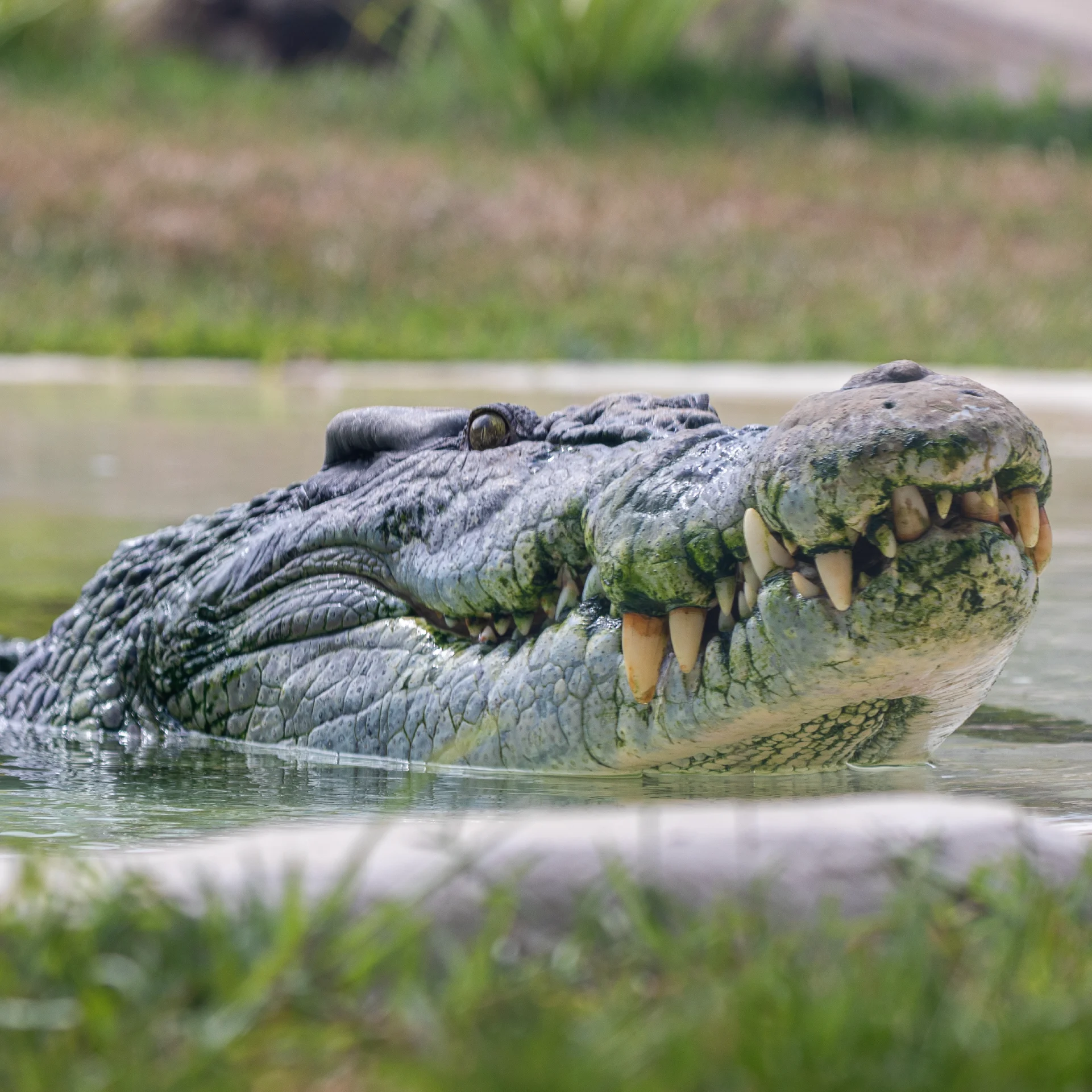
Everything about a crocodile’s body is suited to hunting from the water. Its eyes, nostrils and ears are positioned high on its head, allowing it to remain almost completely submerged while still being able to see, breathe and listen. From the riverbank, you may see nothing more than two eyes and the top of a snout above the water. To an unsuspecting animal, the crocodile can be almost impossible to distinguish from a log or a piece of vegetation.
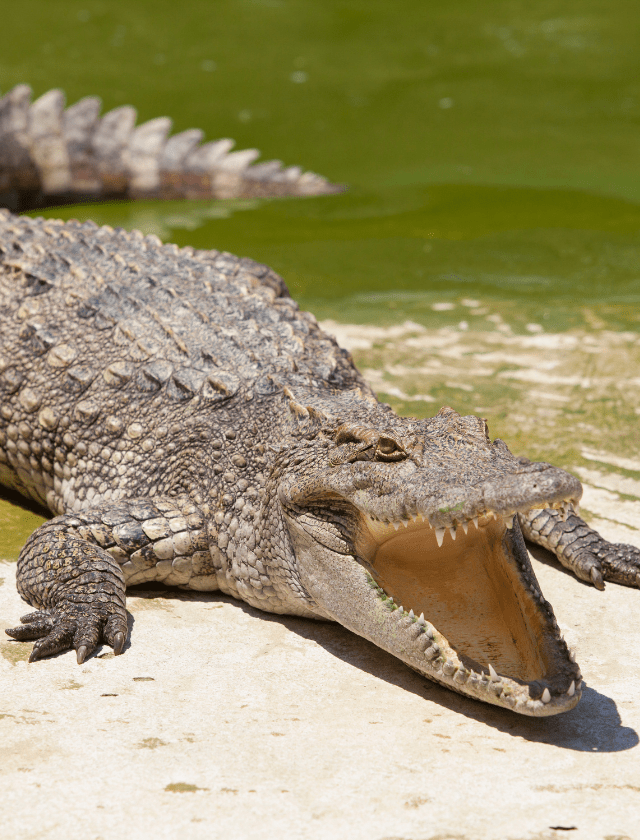
The rest of the body is equally well adapted to this lifestyle. A powerful tail provides the main source of propulsion in the water, allowing the crocodile to move surprisingly quickly when it needs to. Its legs help with steering, manoeuvring through shallow water and moving onto land. Then there are the jaws. A large crocodile can close its jaws with tremendous force, and its numerous conical teeth are perfectly suited to gripping and holding onto struggling prey.
But the crocodile’s greatest weapon isn’t its bite. It is the combination of that bite with patience, camouflage and timing.
Patience Is Part of the Hunt
A crocodile does not need to spend its day constantly searching for food. Instead, it can select a strategic position and wait. This might be beside a well-used drinking spot, along a river crossing or close to a shallow section where animals regularly enter the water.
This strategy becomes particularly effective during the dry season. As water becomes scarce, wildlife has fewer choices about where it can drink. Antelope, buffalo, warthogs and other animals may return to the same water sources day after day. The crocodile does not have to find them. It simply needs to be in the right place when they arrive.
This is what makes crocodile hunting so efficient. The predator spends very little energy while waiting. If nothing happens, it has lost almost nothing. If an animal comes within striking distance, however, the crocodile can go from completely motionless to attacking in a matter of seconds.
That is why a crocodile lying quietly in the water should never be mistaken for an animal that is simply resting. It may be watching everything around it.
The Approach to the Water
The most dangerous part of a crocodile’s hunting strategy is often the part the prey never notices. An animal approaching a river or waterhole is usually focused on getting a drink and remaining alert to threats on land. It may be scanning the surrounding bush for lions, leopards or other predators.
The crocodile presents a very different kind of danger.
Instead of coming from the bush, the threat is waiting in the water.
A crocodile can slowly position itself close to the edge while remaining largely concealed. It does not need to rush. In fact, sudden movement would often give away its presence. The best strategy is to remain still and allow the prey to close the distance.
This is particularly effective where animals have limited choices about how they approach the water. A narrow section of river, a muddy drinking point or a regularly used crossing can become an ideal ambush site.
From the crocodile’s perspective, there is no need to chase an animal across a kilometre of bush when the animal is eventually going to come within a few metres of you.
When Everything Suddenly Explodes
The contrast between a crocodile waiting and a crocodile attacking is extraordinary.
For an hour, it may look like nothing is happening. Then an animal steps too close and suddenly the water erupts. The crocodile drives its powerful tail and body forward, opens its jaws and attempts to secure the prey.
The attack is based on surprise. The crocodile does not want a long chase or a prolonged struggle. It wants to get hold of the animal before it has a chance to react.
Once those jaws close around the prey, the crocodile’s incredible bite force becomes a major advantage. The animal may struggle, kick and twist, but escaping from a large crocodile is extremely difficult.
This is one reason crocodile attacks can be so difficult to witness. If you happen to be watching at exactly the right moment, the speed of the attack can be startling. One second the river appears completely calm; the next there is a violent splash and a battle taking place at the water’s edge.
The Death Roll
One of the most famous behaviours associated with crocodiles is the death roll. Once a crocodile has secured its prey, it may clamp down and rotate its entire body rapidly through the water.
It is a brutal-looking behaviour, but it serves a very practical purpose.
Crocodiles do not chew their food like mammals. Their teeth are designed for gripping and holding rather than grinding. When dealing with large prey, the crocodile therefore needs another way of breaking the carcass into manageable pieces.
The death roll provides that solution.
By holding tightly with its jaws and rotating its powerful body, the crocodile can tear flesh from the carcass. The movement can also disorient and injure prey that is still alive.
Watching a crocodile perform a death roll makes it clear that its entire body is part of the hunting and feeding system. The jaws hold the prey, while the powerful muscles of the neck, body and tail generate the movement needed to overpower and process it.
Why Take Prey Underwater?
For a crocodile, water provides another major advantage once it has secured its prey.
An antelope may be fast and agile on land, but those advantages disappear quickly when it is being dragged through the water. The crocodile, on the other hand, is completely at home in that environment.
A crocodile may therefore attempt to pull prey into deeper water after making a successful grab. This can make it much harder for the animal to escape. The crocodile can use its jaws, body weight and powerful tail while the prey struggles against the resistance of the water.
For some prey, drowning may eventually become part of the process.
This is an important aspect of crocodile hunting. The water is not simply where the crocodile happens to live. It is an essential part of its hunting strategy, providing concealment before the attack and an advantage over terrestrial prey afterwards.
What Do Crocodiles Actually Eat?
Despite their reputation as hunters of large mammals, crocodiles are opportunistic predators and will eat whatever prey they can capture efficiently.
Young crocodiles naturally concentrate on smaller prey. Fish, frogs, insects, crustaceans and other small aquatic animals can make up an important part of their diet. As a crocodile grows, its options increase.
Large crocodiles can take fish, turtles, birds, snakes and mammals. In Africa, large Nile crocodiles are capable of tackling surprisingly large prey, including antelope and warthogs that come down to drink.
They can also prey on livestock and, under certain circumstances, humans.
However, it is important not to imagine that every crocodile is constantly looking for a large animal to attack. That would be a waste of energy and an unnecessary risk. If a fish or smaller animal provides an easy meal, there is little reason to attempt something much larger.
Like many successful predators, crocodiles are opportunists. They take advantage of what is available.
Hunting Fish
Not every crocodile hunt ends with a dramatic attack on a large mammal. Fish are an important food source, particularly in rivers and other productive waterways.
A crocodile may position itself in shallow water and wait for fish to come within range. It can then make a sudden movement with its head and jaws to seize the fish.
Its sensory abilities are particularly useful in water. Specialised sensory organs around the jaws can detect disturbances and pressure changes in the surrounding water. This helps the crocodile detect movement, even when visibility is poor.
For an animal that often hunts in muddy or murky water, this ability can be extremely valuable.
Birds Are Not Safe Either
Birds feeding along the water’s edge can also become targets. Wading birds, ducks and other species may spend considerable time standing or feeding in shallow water.
A crocodile lying almost completely submerged can be difficult to spot, particularly if the water is muddy or the shoreline is covered with vegetation.
When the bird comes close enough, the crocodile can launch upwards and attempt to grab it.
The attack has to be timed precisely. A bird has the advantage of flight, so the crocodile’s opportunity may last only a fraction of a second. But that is enough for a predator that has spent millions of years perfecting the art of ambush.
How Drought Changes the Game
Water levels can have a significant effect on crocodile hunting. During periods of plenty, animals may have many different places to drink, and wildlife can be spread across a much larger area.
During a dry spell, the situation changes dramatically.
As smaller pools dry up and rivers shrink, animals become concentrated around the remaining reliable water sources. These areas can become incredibly busy, with different species arriving throughout the day.
For the crocodile, this can create an ideal hunting environment.
The irony is that the waterhole is essential to the prey’s survival but can also be one of the most dangerous places for it to visit.
This is one of the fascinating realities of African ecosystems. Survival often means taking a risk. An animal cannot simply avoid the water because there may be a crocodile waiting there. It needs to drink.
And the crocodile knows it.
The Ultimate Energy-Saving Predator
Crocodile hunting is an incredibly economical way of obtaining food.
Consider the effort required by other predators. A lion may spend hours walking through its territory looking for prey. African wild dogs can travel considerable distances during a hunt, while a cheetah may use an enormous amount of energy during a high-speed chase.
The crocodile can simply wait.
Its relatively slow metabolism allows it to survive for long periods without feeding. It can spend much of its time conserving energy and only expend significant effort when there is a realistic opportunity for a meal.
This is a highly successful survival strategy. The crocodile doesn’t have to win every hunt. It simply has to be patient enough for opportunities to come along.
In a sense, the crocodile has turned patience into a hunting weapon.
Watching Crocodiles on Safari
One of the best things about seeing crocodiles on safari is that you can start looking at them differently once you understand their behaviour.
Instead of simply seeing a large reptile lying on a sandbank, look at where it is positioned. Is it close to a drinking point? Is it facing a narrow channel? Are animals regularly approaching that section of the river?
Watch the crocodile’s eyes. Look for small changes in its position. Notice how little movement it makes.
You may find that what initially appears to be an inactive animal is actually sitting in a carefully selected hunting position.
And sometimes, of course, nothing happens at all.
That is part of crocodile hunting.
The crocodile can wait far longer than you can.
An Ancient Strategy That Still Works
There is something remarkable about watching a crocodile hunt. Its strategy is simple, but incredibly effective. Hide. Wait. Watch. Strike.
It does not need the speed of a cheetah or the teamwork of a wild dog pack. It has developed a different set of tools: camouflage, patience, powerful jaws, a muscular body and an environment that gives it a significant advantage.
The crocodile’s success comes from all these adaptations working together. Its eyes allow it to watch while submerged. Its nostrils allow it to breathe while remaining concealed. Its tail provides explosive acceleration, while its jaws and teeth allow it to secure prey. The death roll then helps it deal with animals that are too large to swallow whole.
Perhaps the most impressive part is that the crocodile does not need to do very much at all.
It simply waits for the right moment.
The next time you see a crocodile lying motionless beside a river in Kruger National Park, take a little more time to watch it. That ancient-looking reptile may appear to be doing nothing, but it could be watching the shoreline, listening to movement around it and waiting for an animal to make one small mistake.
Then, in the blink of an eye, the stillness disappears and the ancient predator comes alive.
The attack may last only seconds.
The strategy behind it has been perfected over millions of years.
Experience Kruger’s Wildlife with Intrepid Odyssey
Want to see crocodiles and the rest of Kruger’s incredible wildlife for yourself? A safari is about much more than simply finding animals. It is about understanding what you are seeing, reading behaviour and learning how the different species fit into the larger ecosystem.
At Intrepid Odyssey, we offer private Kruger safaris and day safaris with an experienced private guide who understands the bush and the behaviour of its wildlife. Whether you are fascinated by predators, elephants, birds, reptiles or the smaller creatures that are so often overlooked, every game drive has a story to tell.
If you are planning a visit to the Kruger area and want a more personal safari experience, get in touch with us and let us help you make the most of your time in the African bush.
Visit www.intrepidodyssey.com to learn more about our private Kruger safaris and day safaris, as well as the custom built itineraries.
Bookings: bookings@intrepidodyssey.com
WhatsApp / Phone: +27 84 506 4151
Intrepid Odyssey – Life Changing.